Casino Product Design as a Case Study in Testing

Few industries know as precisely as casinos how a change in product design changes customer behaviour. Every slot machine has a published mathematical model, every table game has a known house edge, and modern casinos log play in detail. That makes the casino a fascinating, and sometimes uncomfortable, case study in product testing.
Slot maths: the model behind the reels
A slot game is defined by its maths model: the symbols on each virtual reel, their weights, the paytable and the bonus features. Together these set the game's return to player (RTP), the long-run share of money wagered that is paid back as prizes, along with its hit frequency (how often any win occurs) and volatility (how lumpy the wins are). Regulators set minimum returns; Nevada, for example, requires machines to pay back at least 75% over time, and some other jurisdictions set higher floors. Most machines pay back considerably more than the legal minimum.
Two games with the same RTP can feel completely different. A low-volatility game pays small wins often; a high-volatility game pays rarely but sometimes big. Choosing the right mix for a given audience is a design decision informed by data.
How games are tested
- Certification. Independent test laboratories check that a game's software and random number generator behave as specified before regulators approve it.
- Field trials. New table games and devices are often trialled in a live casino under regulatory supervision, the casino world's version of an MVP (see MVP types).
- Floor performance. Operators compare games by revenue per unit per day and by how often they are chosen, and swap out under-performers.
- Online and social casino testing. Digital slot studios and social casino apps are widely reported to test features, bonus pacing, themes and store offers with A/B experiments, as many consumer apps do.
Loyalty data and control groups
Player cards turned casinos into data businesses. In the late 1990s and 2000s Harrah's, under Gary Loveman, became a business-school case study for using its loyalty database to test marketing offers against control groups, and for focusing on the value of regular local players rather than only high rollers. We tell that story in product-market fit signals. The method, measuring an offer's effect against a matched group that did not receive it, is exactly what good A/B testing does.
The floor itself as an experiment
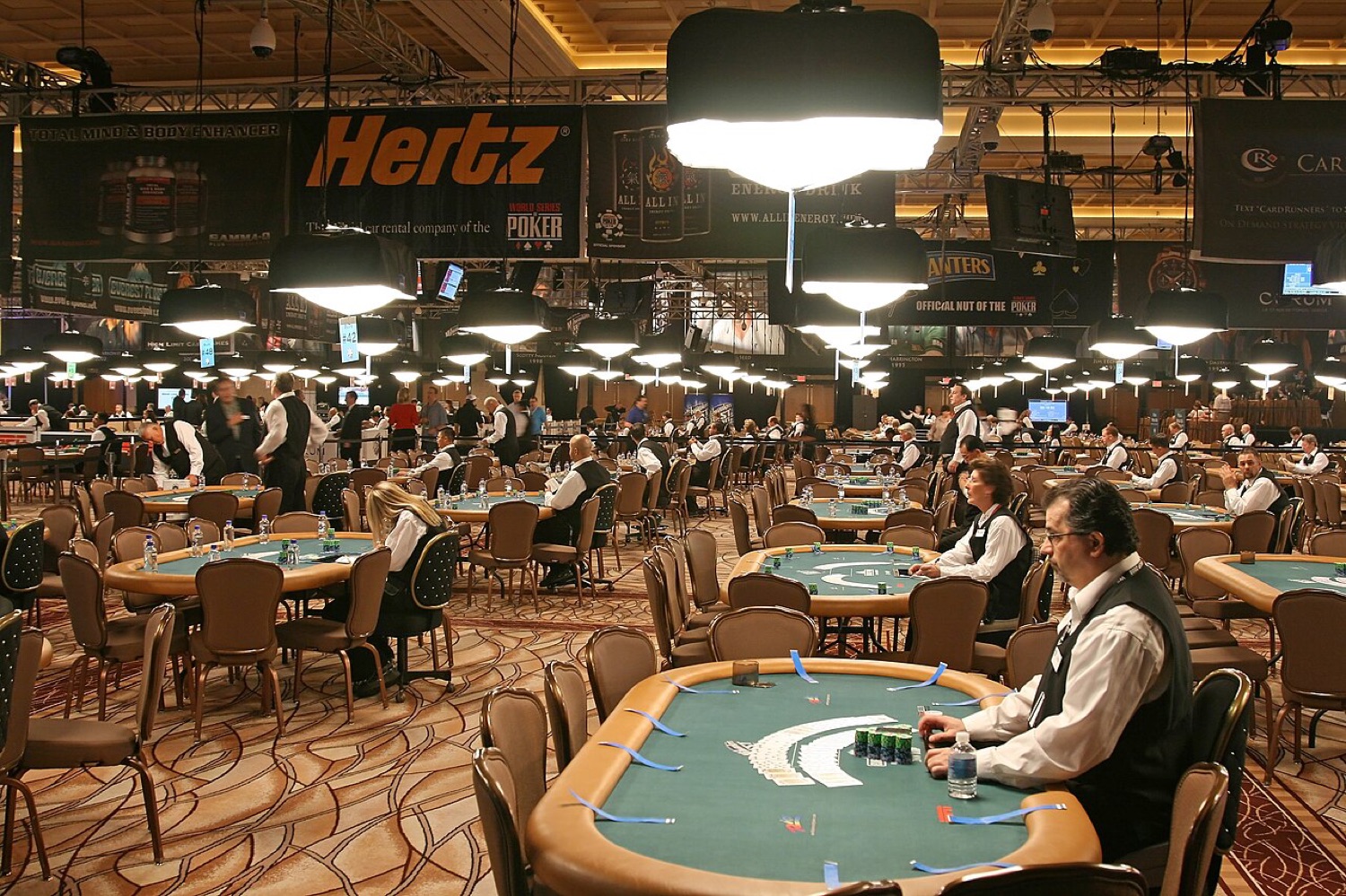
Casino layout has been argued over for decades. Bill Friedman, a former casino manager, set out a set of design principles in Designing Casinos to Dominate the Competition (2000), favouring low ceilings, compact spaces and maze-like layouts that keep players among the machines. Later resorts such as the Bellagio and Wynn Las Vegas were designed around a different philosophy, with high ceilings, natural light and open "playground" spaces. Academic studies comparing the two approaches have found evidence that the more spacious, pleasant environments can hold their own and in some measures do better. For founders, it is a good case of a long-held industry belief being tested and partly overturned.
The dark side: optimising for the wrong metric
Testing is a tool, and casinos show both its power and its risks. The anthropologist Natasha Dow Schüll, in Addiction by Design (2012), documented how machine design and floor environments in Las Vegas were refined to extend "time on device", and how some heavy players described being absorbed in a trance-like "zone". Her work is a reminder that optimising a single engagement metric can conflict with customers' own interests, and that regulators increasingly set limits on features such as spin speed and autoplay in some markets.
The lesson for any product team is to choose metrics carefully. Engagement that customers value is the goal; engagement extracted at their expense is a liability that eventually shows up in churn, reputation or regulation.
What founders can borrow
- Know your model. Casinos know their edge to the decimal place. Know your unit economics just as precisely (see pricing tests).
- Trial before rollout. Pilot new features with a slice of users.
- Always keep a control group. Without one, you cannot tell what your change did.
- Question industry dogma. The maze-layout consensus was eventually challenged by better tests.
- Choose humane metrics. Measure value delivered, not just time captured.
For the statistics behind trustworthy experiments, read A/B testing statistics and A/B testing versus gambler's intuition.